Instant Lessons
Are you looking for instant materials for your next class? If you're going through the textbook too quickly, or if you're running out of ideas, this is the place to look. We've got a great collection of ESL worksheets which will keep your students busy.
Unlock Access to Hundreds of Premium Worksheets!
Our extensive collection of high-quality worksheets will help you teach more effectively and engage your students.


Learning Something New
This worksheet looks at more advanced structures using 'able to'.
Language practiced includes: 'how long have you been able to' and 'I've never been able to'.
After the lead-in, there are four 'vox pop' readings, followed by practice exercises.
You can reinforce the target language with our class survey, or use out set of discussion question cards.
This worksheet is written for intermediate-level students.


Meeting the New Neighbor
This worksheet looks at some common expressions related to introducing yourself and inviting someone to your house.
There is a conversation, vocabulary-building exercises, role-play and discussion.
This worksheet is written for lower-intermediate level classes.


Public Speaking
Are you (or your students) confident when standing up in front of others? Can they deliver a speech or presentation with panache?
This worksheet looks at some ways we can become better public speakers. There is a reading, vocabulary practice and discussion. Expressions covered include:
- to find something nerve-wracking
- to parrot something
- to have someone in stitches
- to relish the prospect of doing something
- ...and much more!
There are exercises to consolidate the language, and your students will have the opportunity to use them in discussion at the end of the lesson.
This worksheet is written for upper-intermediate and advanced learners.


Speaking in Public
This is a lower-level version of our worksheet 'Public Speaking'.
This worksheet looks at some advice on becoming a better public speaker.
Following the lead-in, there is a collocation matching exercise and then a brief gap-fill text.
Expressions studied include:
- give a presentation
- stand up in front of others
- take a deep breath
- fall asleep
- go on a course
Following comprehension questions, there is preposition practice and discussion questions.
This worksheet is written for lower-intermediate classes.
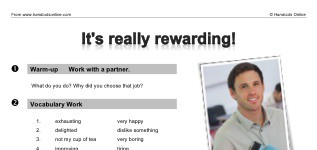
It's really rewarding!
This conversation-based worksheet looks at gerund phrases. It's the kind of language elementary students need to become confident with in order to more intermediate-level structures.
Examples include: Watching TV is fun. / I enjoy playing tennis on Sundays.
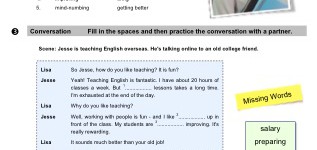
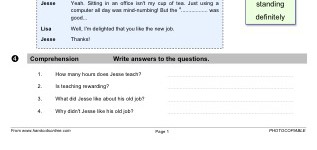
This worksheet has vocabulary work, a gap-fill conversation, comprehension questions, language work, role-play and discussion.
It's written for elementary-level students. Some intermediate students would no doubt also benefit from a review of this language.
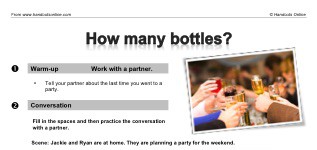
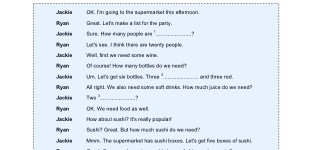

How many bottles?
Help your students to master 'much' and 'many' with this worksheet.
There's a gap-fill conversation with two people making a shopping list for a party. There are practice exercises to improve accuracy and fluency with the target language, as well as vocabulary building. (A loaf of bread, a carton of millk etc.)
Your students will have the opportunity to role-play, using food and drink which they would want at a party.
Finally, there are a number of discussion questions, so that your students can talk about the topic more.
This worksheet is written for elementary-level students. It would also make good revision for pre-intermediate classes too.
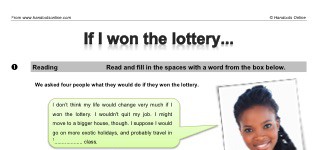


If I won the lottery...
Conditionals can be tough for students. This worksheet will help build their fluency when talking about unlikely or hypothetical situations.
The lesson begins with four gap-fill vox-pops, focusing on what people would do if they won the lottery. This is followed by vocabulary building, with expressions covered including -
- do something rash
- invest money
- go somewhere exotic ... and more
The lesson has a game where students need to match two halves of sentences and then put them into the second conditional.
The worksheet rounds off with a speaking activity where students must decide how they would spend five million pounds / dollars.


Could you become a vegetarian?
Get your intermediate-level students debating with our worksheet on becoming a vegetarian!
This handout has four short 'vox-pop' readings. Your students will learn vocabulary such as:
cruel
unappetizing
animal welfare
go without (food)
be a pain
This is followed by a true/false comprehension exercise.
The second part of the lesson has students prepare for a debate on the pros and cons of being a vegetarian. There are expressions highlighted for giving opinions - and disagreeing with others.