Intermediate-Level Worksheets

This is a detailed list of our intermediate-level worksheets. It's easy to adjust our materials to make them easier or more difficult. If you're looking for a specific worksheet, our search engine will help you pinpoint it in seconds!

Unlock Access to Hundreds of Premium Worksheets!

Our extensive collection of high-quality worksheets will help you teach more effectively and engage your students.

Premium Worksheets
Animal Idioms (part 1)
Animal Idioms (part 2)
Animal Idioms (part 3)

Animal Idioms

Structure: Idioms, Discussion
Time: 45 min
Level: Intermediate +

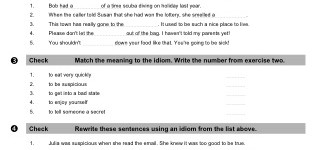
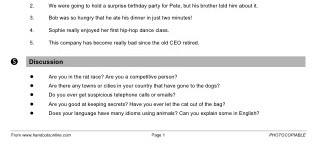
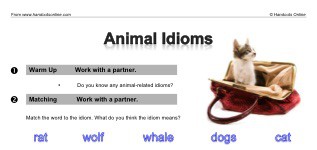
How well do your students know English idioms? This worksheet looks at five common idioms, grouped by the theme of animals. Your class will learn about: - smell a rat - gone to the dogs - have a whale of a time - let the cat out of the bag - wolf something down There is a lead-in question, followed by gap-fill exercises. Your students need to guess the meaning of the idioms and then rewrite sentences using the new expressions. The worksheet rounds off with discussion questions, so that your students can use (and personalise) the language. This worksheet is written for intermediate levels and above.
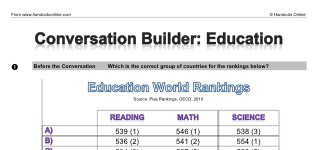
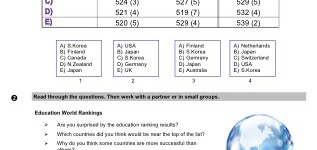
Conversation Builder: Education (part 1)
Conversation Builder: Education (part 2)
Conversation Builder: Education (part 3)

Conversation Builder: Education

Structure: Discussion, Fluency, Vocabulary
Time: 45 min
Level: Intermediate +
Do your students know about the PISA rankings? It's a comparison of education levels for reading, math and science around the world. Which countries are top? It is a valid comparison? This discussion-based worksheet starts with a quiz - can you students match the countries to the ranking? From this there are lots of discussion questions. Your students will talk about the issues raised, and discuss the education systems in their countries. There is also the opportunity for your students to talk about their experiences at school. This worksheet is written for intermediate levels and above.

Showrooming (part 1)
Showrooming (part 2)
Showrooming (part 3)

Showrooming

Structure: Reading, Vocabulary & Discussion
Time: 60 min
Level: Intermediate and Above

Shopping habits are changing very quickly, with many people buying products online. This worksheet looks at the phenomenon known as 'showrooming' where people look at products in bricks-and-mortar stores, before buying the product online.

There is a gap-fill reading, with comprehension questions and the opportunity to debate some of the issues and hold a discussion on the changing face of shopping in the 21st century.

It's a great topic to get your students speaking. This worksheet is great for intermediate level and above.

You might also like to try our worksheet Don't Believe the Hype. It's a fun look at TV shopping!

Picture Level Check (part 1)
Picture Level Check (part 2)
Picture Level Check (part 3)

Picture Level Check

Structure: Level Check (Low Level)
Time: 15 min
Level: Elementary - Pre-Intermediate
This picture can be used to establish the abilities of lower-level students. It can be used on its own, or together with our fuller level check. The picture comes with a set of suggested questions. You can simply ask the student to make as many sentences as possible about the picture, and/or ask some yourself. This picture can be used to check: * there is / there are * pronouns * to be * have / have got * clothing (including plurals) * present simple * present continuous * countable and uncountable nouns * time * weather * basic prepositions
Level Check for Spoken English (part 1)
Level Check for Spoken English (part 2)
Level Check for Spoken English (part 3)

Level Check for Spoken English

Structure: Various
Time: 10-20 min
Level: Elementary, Intermediate, Advanced

This level check is a great way to check your students' spoken English ability.

This level check has around one hundred questions ranging from elementary level structures such as to be / there is, as well as tenses, passives, conditionals, adjectives, phrasal verbs, used to, and higher level structures. (recommend, insist, despite, cleft sentences etc.)

The questions gradually become more difficult. It's not necessary to ask them all; you can stop when the student is struggling.

If you have lower-level students, you could use the picture level check instead.

After conducting this level check, you'll have an excellent idea of your students' strengths and weaknesses in English.

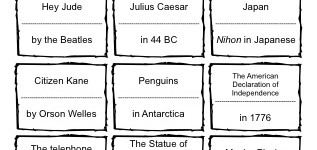
Passive Pairs (part 1)
Passive Pairs (part 2)
Passive Pairs (part 3)

Passive Pairs

Structure: Passive - Present and Past Simple
Time: 15 min
Level: Elementary - Pre-Intermediate
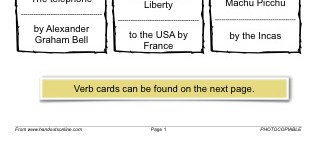
Students need lots of practice of basic passive forms! This game will help take the pressure off them and add an element of fun to the lesson. This pairs game (also called concentration or pelmanism) has twelve different sentences made up of 24 cards. Students need to match the verb to the cue. They will then be able to make sentences such as: Penguins are found in Antarctica and Citizen Kane was directed by Orson Welles This worksheet is ideal for low-level students who are very new to the passive form.
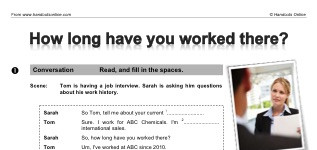
How long have you worked there? (part 1)
How long have you worked there? (part 2)
How long have you worked there? (part 3)

How long have you worked there?

Structure: Present Perfect Simple with For / Since
Time: 45 min
Level: Pre-Intermediate
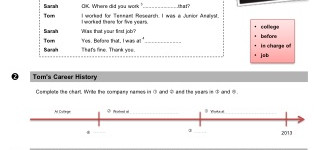
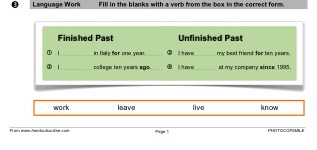
The present perfect can be tough for students. However, this business handout will help them master the use of the tense for unfinished past, using 'for' and 'since'. There is an opening gap-fill conversation followed by exercises practicing the target language. Your students will also have the opportunity to conduct a class survey, asking their classmates about their work history. This worksheet is primarily for lower-intermediate level students.
The Language of Presentations (part 1)
The Language of Presentations (part 2)
The Language of Presentations (part 3)

The Language of Presentations

Structure: Giving Presentations
Time: 45 to 60 min
Level: Intermediate +

Giving a presentation is tough in any situation - let alone if you're speaking in a foreign language!

This worksheet is designed to help your students build their confidence at speaking in public in English.

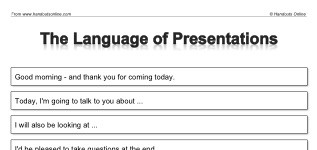
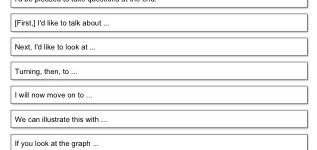
There's a matching exercise of useful 'presentation expressions' followed by an example set of notes for a presentation. Your students will then choose a topic and prepare to speak for a few minutes about it.

You can use this worksheet with both business and general English students.

This worksheet is ideal for intermediate levels and above.